New CD
BC RECORDS RELEASES CD OF MUSIC BY BETH CUSTER AND THE LEFT COAST CHAMBER ENSEMBLE;
LEFT COAST HOSTS RELEASE PARTY
AFTER OPENING CONCERT OF 2006-07 SEASON IN SAN FRANCISCO
On Monday, October 30, 2006, in the Green Room at 401 Van Ness Avenue in San Francisco, the Left Coast Chamber Ensemble hosted a party to celebrate the release of BC Records’ newest CD, Bernal Heights Suite, featuring music composed by Beth Custer and performed by the Left Coast Chamber Ensemble. The release party was held immediately after the first concert of the group’s 2006-2007 season.
The new CD features two works composed by Beth Custer and commissioned by the Left Coast Chamber Ensemble: the string trio Scary Monster, and her work for voice and string quartet, Bernal Heights Suite. “Left Coast has a long history of collaborating with many fine composers, and Beth Custer is one of our oldest and most important relationships. Beth is an absolutely fine musician and possesses a truly unique creative sense that is direct and moving. The works on this new CD show the breadth of range in her abilities. Her music is deceptive; it will charm you and draw you in. It fits into no easily define genre, and covers a wide spectrum. She is a delightful person to work with and these two works show Beth at her best; in tense, whimsical, compelling, and touching works. We hope you enjoy the music as much as we have,” states LCCE Artistic Director Kurt Rohde.
Review copies of the CD are available from Beth Custer at www.BethCuster.com. The CD will be sold through a variety of channels, including the “CD Store” section of www.BethCuster.com and at concerts of the Left Coast Chamber Ensemble.
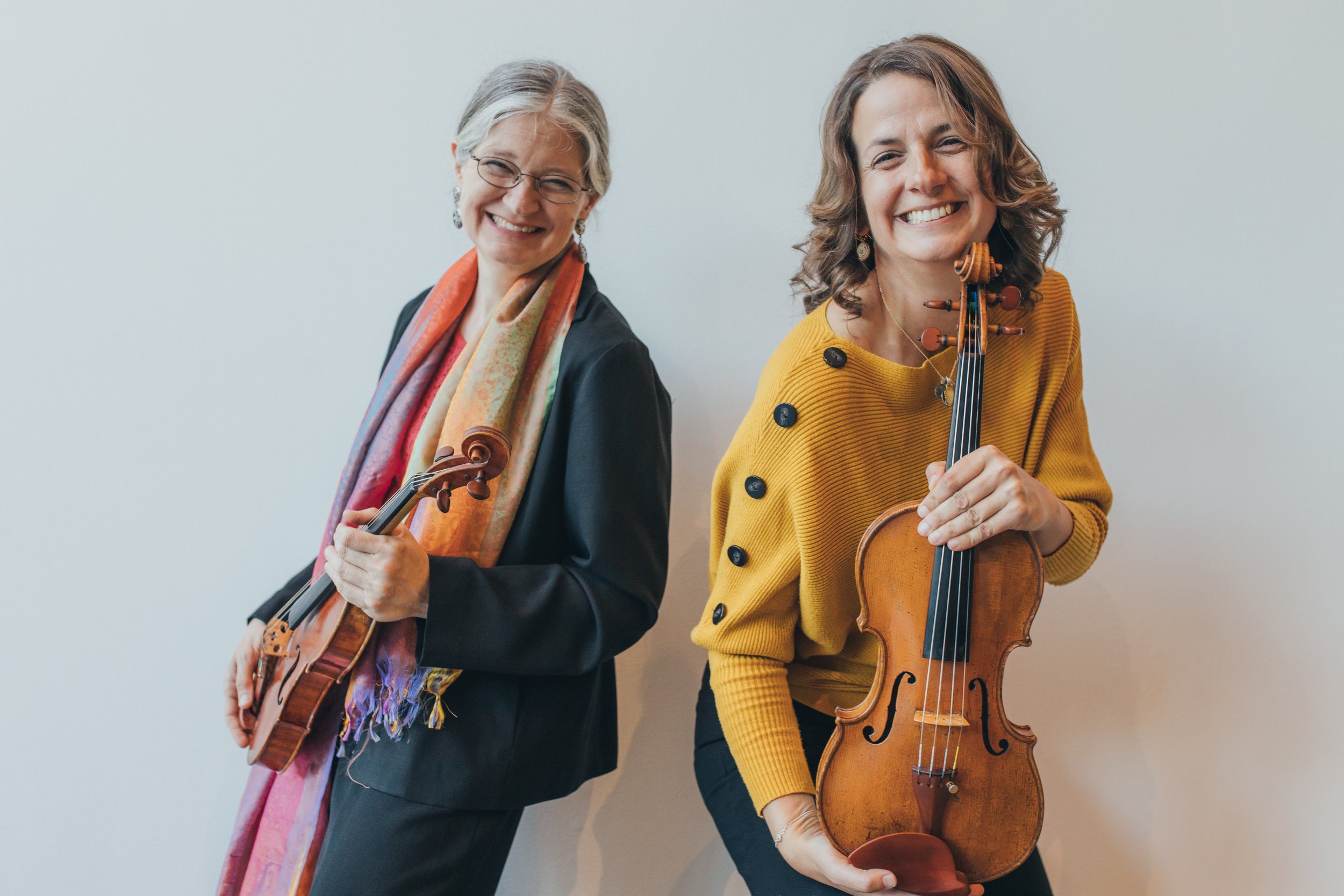
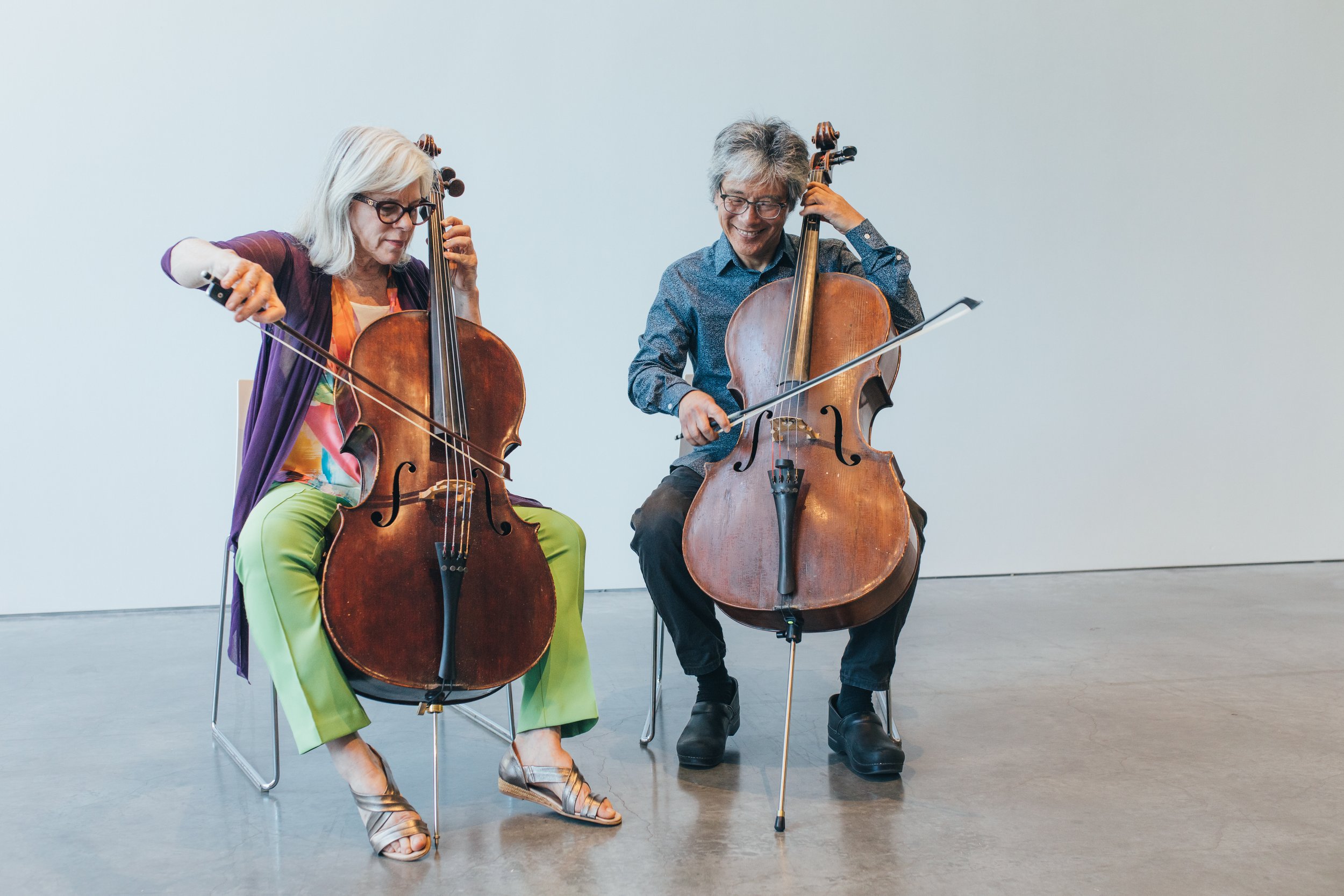
Left Coast members Anna Presler - violin, Kurt Rohde - viola and Leighton Fong - cello perform Scary Monster and Anna Presler – violin, Phyllis Kamrin – violin, Kurt Rohde – viola, and Leighton Fong – cello, join Beth Custer – vocals on Bernal Heights Suite.
Beth Custer writes about her CD: “Bernal Heights is a charming and diverse San Francisco neighborhood where I’ve been lucky enough to have lived, walked, and composed for over a dozen years. Bernal Heights Suite for String Quartet and Voice contains reflections in musical homage to aspects of the neighborhood that have influenced my life. ‘The General of Godeus’ portrays an eccentric neighbor who walks around in full military regalia. ‘Little Lundy’s Lane’ describes the pretty little lane I lived on for 13 years. ‘Daikon Radish’ celebrates the bounteous flora and fauna of Bernal hill. ‘Big Love on Folsom Street’ is about my big love who lives on Folsom, another Bernal street. ‘Market Hodown!’ observes a woman at our luscious farmer’s market. ‘Café Abo R.I.P.’ reminisces about my long-gone favorite café whose owner is a friend and a music fan. In ‘Progressive Grounds’, I strung together the names of many of the businesses on Cortland, the neighborhood’s main street, in a cry for peace from the hilltop. Has it been heard?!
“Writing for a string trio isn’t easy. It’s a transparent ensemble and can see through any tricks you try. In Scary Monster String Trio I’ve written a film score without a film using euphoric/melancholic melodies over bi-tonal chordal movement and slightly askew rhythms. I’ve also included some extended string techniques in order to stretch the sound and keep the musicians interested. In preparation I studied the string quartets of Bartok, Crumb, and Gorecki.
“I’m lucky in that I almost always know the person for whom I’m writing. So, after having tested the waters with Left Coast members on Vinculum Symphony, it was a delight to return to working with them. They are truly local treasures and know how to create a movie soundtrack with no movie to watch!”
BETH CUSTER is a San Francisco based composer, performer, bandleader, clarinet teacher, and the proprietor of BC Records.
Beth is a founding member of the notorious silent film soundtrack purveyors, the Club Foot Orchestra, 4th world ambient ensemble Trance Mission, the quintet of esteemed clarinetists Clarinet Thing, the trip-hop duo Eighty Mile Beach, and the Latin-jazz-rock influenced Doña Luz 30 Besos. She now leads The Beth Custer Ensemble.
Beth released three new releases on BC Records this in 2005 to rave reviews: Respect as a Religion by the Beth Custer Ensemble; Agony Pipes and Misery Sticks by Clarinet Thing; and My Grandmother DVD, 1929 silent comedic Soviet Georgian film with her soundtrack on it. Also in 2005, Beth composed for, and lead her ensemble in, live performances of Hometown, a new production by the Joe Goode Performance Group; A Trip Down Market Street 1905/2005, a live outdoor cinema event by Melinda Stone; composed an evening length musical comedy for Campo Santo Theatre; performed and recorded her Bernal Heights Suite with the Left Coast Chamber Ensemble; and led a DVD release tour of the east coast and San Francisco, performing live with her ensemble to the My Grandmother film.
Beth was one of four recipients of the prestigious 2002 Meet The Composer New Residency Grants. From 2002-05, she was in residence at The Lab in San Francisco, and composed for and collaborated with the Joe Goode Performance Group, Left Coast Chamber Ensemble, and held workshops with TILT. She produced a compilation CD for The Lab’s 20th anniversary and curated three concert series of established and emerging performers.
Beth has received many awards including two artist residencies at the Marin Headlands Art Center, a Phyllis Wattis Residency at Yerba Buena Center for the Arts, several Meet The Composer and NEA Grants, a Mcknight Composer Residency, a San Francisco Arts Commission Individual Artists grant, a Gerbode award, an Isadora Duncan Award, a Bay Guardian Goldie, and two Wammie music awards.
“A woman for all seasons, hers is a big musical personality — versatile, adaptable, and very individual.” – John L. Walters, London Guardian
THE LEFT COAST CHAMBER ENSEMBLE’s
New Compact Disc
“SAN FRANCISCO PREMIERES“

The Left Coast Chamber Ensemble (LCCE) announces the release of its new compact disc recording, “San Francisco Premieres,” featuring live recordings of seven chamber works premiered by the ensemble as part of its regular series. The Ensemble commissioned seven of the Bay Area’s leading composers to create the diverse group of pieces presented on the CD. Three of the compositions were inspired by Beethoven’s extraordinary Opus 131. Copies of the CD are available for $15, postpaid, from the Chamber Music Partnership at 196 Ripley St., San Francisco CA 94110. Click here to order the CDs on the Internet.
Review
Left Coast Chamber Ensemble
San Francisco Premieres
Chamber Music Partnership Inc.
By Michelle Dulak Thomson
January 17, 2006
San Francisco Classical Voice
The Left Coast Chamber Ensemble has premiered so many works here that it is rather easy to lose track. But part of the group’s legacy of the last few years is now handily collected on the ensemble’s newly released CD. Highlights for me were Kurt Rohde’s “Under the Influence” for bass clarinet and string quartet, a piece that manages to be dizzyingly funky and alarmingly intricate at the same time, and Yu-Hui Chang’s “Shadow Chase” for string quartet, a vivid and consistently engaging work. The latter is one of three pieces on the disc inspired by Beethoven’s Op. 131 Quartet, all taking different directions and sounding quite unlike one another. The second movement of the Beethoven itself, finely played, is also here. Given that the new works mainly draw on the first movement, the choice seems slightly odd.
The new works on the CD are by seven composers, all based in the Bay Area: Kurt Rohde (LCCE’s Artistic Director), Laurie San Martin, Nathaniel Stookey, John Schott, Sam Nichols, William Beck, and Yu-Hui Chaing. The Nichols, Beck, and Chaing pieces were all inspired by Beethovens String Quartet Opus 131 in c # minor, and were presented on a concert program which included the Beethoven. Below, each of the pieces is described by the composer, followed by a brief composer biography.
Kurt Rohde: Under the Influence for Bass Clarinet and String Quartet
Recorded May 5, 2004
“Under the Influence is the second movement in a series of short works for mixed ensemble called Play Things. My quintet is active and rugged at one moment, floating and distant at another. The opening bass clarinet line is a fragmented, stilted tune, sort of a wild jazz riff. The music surrounding it is nothing more than an elaborate doubling of the freaked-out clarinet melody. What results is an intricate counterpoint, tense but interlocking and related, suddenly giving way to high, distant harmonics. Under The Influence is dedicated to Jerome Simas.” —Kurt Rohde
Kurt Rohde (b. 1966) is the Artistic Director of the Left Coast Chamber Ensemble and on the composition faculty at the University of California, Santa Barbara. He is a graduate of the Curtis Institute. He has received the Charles Ives Fellowship from the American Academy of Arts and Letters, a Guggenheim Fellowship, and commissions from the Barlow Endowment, the Koussevitzky Foundation, and the NEA. The New Century Chamber Orchestra recently issued Oculus, a compact disc of Rohde’s music for strings.
Laurie San Martin: Concerto for Four (in two movements, played without pause)
Recorded October 24, 2004
“Concerto for Four is intended to complement J.S. Bach’s Musical Offering. Using an instrumentation similar to a Baroque trio sonata (flute, oboe, cello and piano), this two-movement work refers to the Musical Offering with a brief quotation and in its use of extensive ornamentation. In contrast with the Musical Offering, the character of Concerto for Four is energetic and light-hearted. I envisioned a piece that had energy and humor yet still hinted at the Baroque style. I was also inspired by the music of Eric Moe and Kurt Rohde. Concerto for Four is dedicated to my husband Samuel Nichols.” —Laurie San Martin
Laurie San Martin (b. 1968) teaches music theory and composition at the University of California, Davis and co-directs the Empyrean Ensemble. She has received many awards for her compositions including a Charles Ives Scholarship from the American Academy of Arts and Letters. She is a graduate of UC Davis, UC Berkeley, and Brandeis University.
Nathaniel Stookey: Fling for Flute and String Quartet
Recorded March 28, 2005
“Fling is a contraction of FLute and strING. It owes its name particularly to the first entrance of the violins, who attempt to imitate the flute using a combination of harmonics and pizzicati. To some extent, the title also dictated the length of the piece (short) and its pace (fast). As I was composing, I asked flutist Stacey Pelinka to play some of her favorite music for me. She chose two slow unaccompanied pieces with long, delicately ornamented melodies. My piece changed dramatically from that point, with Stacey’s lyricism coloring music that had been extremely dry and brittle. FLING is dedicated to Kurt Rohde and Stacey Pelinka.” —Nathaniel Stookey
Nathaniel Stookey (b. 1970) was born and raised in San Francisco. His music has been performed by a broad range of ensembles, from Turtle Island String Quartet to the Philadelphia Orchestra. He has been resident composer with the Hallé Orchestra and the North Carolina Symphony, and is currently at work on a commissioned work for the San Francisco Symphony. In 2005, Albany Records released Stookey’s Music for Strings (1992-2002).
John Schott: Among of green stiff old bright broken branch come white sweet
May again Recorded October 7, 2002
“I have wanted to set W. C. Williams The Locust Tree In Flower to music since I encountered it eighteen years ago. Its pure minimalism appealed to me, as did its ostensible subject, the slow thaw of winter into spring. The piece begins with isolated notes or gestures, like the isolated words of the poem, or drops of water slowly melting from an icicle. The guitar is to the fore throughout, observing a strict pattern, spiraling outward, and growing with each cyclical renewal.”—John Schott
John Schott (b. 1966) is a guitarist, composer, and educator working in the increasingly overlapping areas between jazz, improvised music, and classical music. He has taught at the University of California, Berkeley and the Jazzschool. His recorded works include the song-cycle “In These Great Times” (Tzadik), “Shuffle Play: Elegies for the Recording Angel“(New World), and “John Schott’s Typical Orchestra” (Smash The State!).
Sam Nichols: Variations for String Quartet
Recorded October 27, 2003
“Variations for String Quartet is a short set of free variations inspired by Beethoven’s op. 131: most of the melodic material is drawn from the first two measures of the Beethoven. I was intrigued by the fifth movement of op. 131, in which the cello seems to have impulse-control problems: it disrupts the texture, blurting out its little arpeggio figure in the wrong place, at the wrong dynamic level. In my piece the instruments are often out of synch with each other: playing a different rhythm, with a different kind of articulation–or simply still engrossed in the last variation, although the others have moved on. Variations is dedicated to Kurt Rohde and the Left Coast Chamber Ensemble.”—Sam Nichols
Sam Nichols (b. 1972) teaches music theory at the University of California, Davis. He studied guitar with Terry Champlin at Vassar College, and is currently a Ph.D. candidate in composition and theory at Brandeis University. He has studied composition with Ross Bauer, Eric Chasalow, Annea Lockwood, David Rakowski, Richard Wilson and Yehudi Wyner. His recent projects include a clarinet quintet commissioned by the Wellesley Composers Conference.
William Beck: Communion for String Quartet and Electronics
Recorded October 27, 2003
“The concept for Communion came when I was in the Sierra Mountains. In nature I often contemplate things spiritual, including music, and influential composers inevitably will come to my mind. Beethoven is always among them. It was then a small step to bring Opus 131 into the picture. In Communion I use samples of a recording of that famous quartet as a key source of the electronic material, although never recognizably so. Communion is a work reflecting one possible coming together of nature and music, and a sense of kinship with composers of the past.” —William Beck
William Beck (b. 1972) teaches electronic and computer music at the University of California, Davis, and oversees the functions of RE4M, the university’s electro-acoustic music studio. His goal is to create music that speaks to listeners both within and outside of the electronic music community. He studied composition at Boston University.
Yu-Hui Chang: Shadow Chase for String Quartet
Recorded October 27, 2003
“Despite being born exactly two hundred years after Beethoven and half a world away, I feel a connection to him through his music as if the distance of time and space does not exist. My major inspiration from Beethoven is not the technique but the humanity and perseverance that pervade his music. In Shadow Chase, I also tried to project a kind of subtlety and beauty that I perceived in his late string quartet Op. 131. On a technical note, the first four pitches of the fugue subject in the Op. 131 are used in the opening and
serve as the main harmonic material in Shadow Chase.” —Yu-Hui Chang
Yu-Hui Chang (b. 1970) holds degrees from Brandeis University (Ph.D.), Boston University (MM), and the National Taiwan Normal University (BFA). She joined the faculty at the University of California, Davis in 1999, and soon began co-directing the Empyrean Ensemble. An award-winning composer, Ms. Chang’s works have been performed in the U.S. extensively, as well as in other countries such as the Netherlands, Italy, South Korea, China, Japan, and Taiwan.
Ludwig van Beethoven: String Quartet Op. 131 in c sharp minor — 2nd
movement; Allegro molto vivace Recorded October 27, 2003.
“Beethoven (1770-1827) once said that Op. 131 was his favorite. Having once made the acquaintance of Beethoven’s c# minor String Quartet, audiences and players both dream of meeting up with it again. As we, too, found ourselves under the spell of Opus 131, we organized a program around it. The enchantment of the piece comes, perhaps, from the way it unfolds its surprises, making each unexpected development seem the only and perfect response to what came before it.” —Anna Presler, violin, Left Coast Chamber Ensemble.